
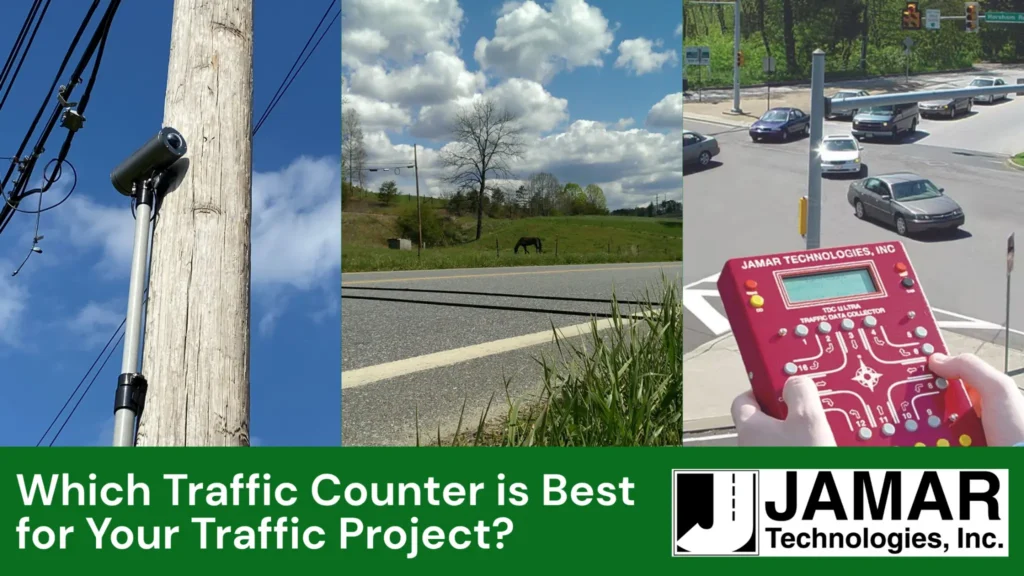
Every good traffic study starts with the same question: what do you need to know, and which device can actually tell you? Pneumatic tubes, radar recorders, video cameras, and manual count boards are all proven tools, but each one is built for a particular kind of job. Choose the wrong one and you can end up with incomplete data, a blown budget, or a study you have to repeat.
How to Choose a Traffic Counter: Tubes, Radar, Camera, or Count Board
What Types of Traffic Data Do You Need?
Start with the end result. Traffic studies can capture a wide range of data, including:
- Volume: how many vehicles pass a point
- Classification: what types of vehicles they are, from passenger cars to heavy trucks
- Speed: how fast vehicles are traveling, including averages and percentile speeds
- Length: vehicle length, which some devices use to estimate class
- Gap: the time or distance between vehicles
The critical point is that certain devices can capture some data types and not others. A basic volume-only counter will never give you speed or classification, no matter how long you leave it out. If your project calls for speed studies, truck percentages, or gap analysis, confirm up front that the device you are considering records those fields. For example, JAMAR’s TRAX Pinnacle tube counter records time-stamped data that STARnext software can process for volume, classification, speed, gap, and more. Collecting the right data the first time is always cheaper than going back for a second study.
How Long Do You Need to Count?
Count duration shapes your choice more than most people expect. A short-term count might run for a few hours during a peak period, while a long-term study may run for a week or more to capture daily and weekly patterns.
Some equipment is designed for extended deployments, while other equipment is limited to short-term use because of power consumption or budget constraints. Video systems, for example, can draw significant power and generate large amounts of footage to review, which makes them better suited to targeted time windows. Manual counts depend on staff time, so costs rise quickly as hours increase. Tubes and radar recorders, on the other hand, are typically built to run unattended for longer periods. Before you commit to a device, define your duration, then check battery life, storage, and the labor or processing time that comes with it.
Is the Location an Intersection or an Arterial?
The geometry of the site is one of the clearest dividing lines between devices.
Intersections
Intersections involve turning movements, stopping, starting, and vehicles weaving through one another. For these sites, cameras or manual count boards are ideal. They can distinguish which direction each vehicle turns and track movements that a roadside sensor cannot separate.
Arterials & Straightaway Roads
Roads with steady traffic are where tube counters and radar belong, and they should only be used on straight road segments with free-flowing traffic. Tubes and radar rely on vehicles passing the sensor at a fairly consistent pace. Heavy stop-and-go congestion, queuing, or turning traffic can cause missed or misread vehicles and compromise the accuracy of your data.
If you are unsure how to categorize a site, ask whether vehicles move through it in a predictable line or interact with one another. If they interact, you likely need a camera or a count board.
Municipal traffic programs reflect this split. The City and County of Honolulu’s Planning Studies Branch, for example, runs JAMAR TRAX pneumatic tube analyzers alongside video units for its traffic survey studies, matching the equipment to roadway conditions.
How Many Lanes Are You Counting?
Lane count affects both the equipment you choose and how you set it up.
- Tube counters offer different setup options depending on the number of lanes and the data you need. Layout choices can change what the counter is able to record, so match the configuration to your study goals.
- Radar recorders can be limited by the number of lanes they can cover. On wider roadways you may need multiple devices to capture every lane.
- Cameras can see a lot, but they have distance restrictions. On very wide roadways or large intersections you may want to use multiple cameras to maintain a clear view of every movement.
Planning for lane coverage early helps you budget for the right number of units and avoid gaps in your data.
Need help choosing a traffic counting device? Fill out our contact form.
Quick Reference: Matching the Device to the Job
| Device | Best for | Keep in mind |
|---|---|---|
| Tube counters | Straightaway roads with free-flowing traffic; volume, class, and speed depending on setup | Setup varies by lane count and required data; not for stop-and-go or intersection traffic |
| Radar recorders | Non-intrusive counts on straight, free-flowing roads | Lane coverage is limited; multiple devices may be needed |
| Cameras | Intersections and movements that need visual verification | Distance limits may require multiple cameras; power and review time can limit duration |
| Manual count boards | Intersections and short-term, targeted counts | Labor-intensive; best for shorter study windows |
In Summary
There is no single best traffic counter, only the best one for your study. Work through these questions in order:
- What data do I need? This narrows the field of capable devices immediately.
- How long will the study run? This tells you which devices can realistically stay in the field.
- Is this an intersection or an arterial? This separates cameras and count boards from tubes and radar.
- How many lanes need coverage? This determines setup, and whether you need more than one unit.
When the answers point to more than one option, weigh budget, staffing, and how you plan to process the data. And when a site has unusual conditions, such as mixed traffic, multiple lanes with different flow patterns, or tight budgets, talking through the details with an experienced team can save you from costly mistakes.
Need Help Choosing a Traffic Counting Device?
Choosing the right traffic counter does not have to be guesswork. JAMAR Technologies, Inc. can help you evaluate your project requirements and recommend the equipment that fits your data needs, site conditions, and budget. Contact us today to discuss your next traffic study.
Fill out our contact form or call us at 1-800-776-0940.